A will and a trust can both be part of an estate plan, but they serve different purposes. The better fit depends on your property, family, decision-makers, privacy concerns, and the planning goals that matter most to you.
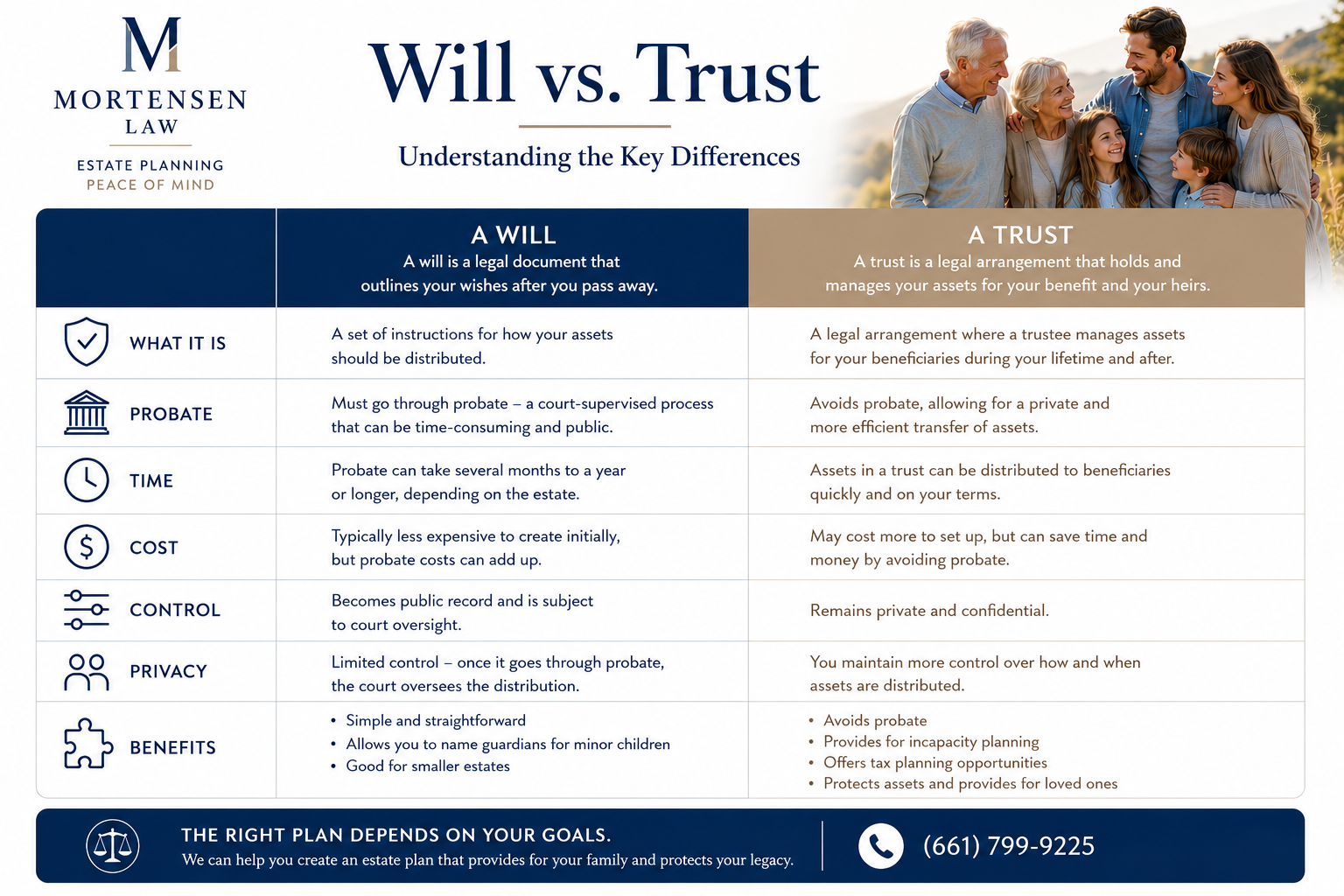
A will names instructions after death
A will can name the people you want to receive property and nominate a guardian for minor children. It may also identify the person you want to handle the estate. Whether a probate process is required depends on the full circumstances, including how assets are owned.
A trust can provide a different structure
A trust is a legal arrangement that can hold assets and set terms for how they are managed or distributed. It can be useful in many situations, but it must be prepared and funded thoughtfully. The right structure depends on the assets and the people involved—not on a one-size-fits-all promise.
The important question is what your plan needs to accomplish
Rather than beginning with “Do I need a trust?”, start with your goals. Who should make decisions? Who should inherit? Are there young children, a blended family, a beneficiary with special needs, real estate, or concerns about a future administration? Those facts help shape the conversation.
Talk about your situation
Every family and estate is different. For guidance tailored to your circumstances, call Mortensen Law to schedule a consultation at the Newhall office.
Call (661) 799-9225Common questions
Frequently asked questions
Is a trust better than a will?
Neither is universally better. A lawyer can explain how each option may work in light of your family, assets, and goals.
Can I have both a will and a trust?
Many estate plans include both. The appropriate documents depend on the particular planning needs involved.
Does a trust need to be funded?
A trust may need assets to be properly transferred or titled to it. The details depend on the plan and the assets involved.
This article is general information only and is not legal advice. Reading it does not create an attorney-client relationship.